 English
 Español
  Português
  русский
  Français
  日本語
日本語  Deutsch
  tiếng Việt
  Italiano
  Nederlands
  ภาษาไทย
  Polski
  한국어
한국어  Svenska
  magyar
  Malay
Malay  বাংলা ভাষার
  Dansk
Dansk  Suomi
Suomi  हिन्दी
  Pilipino
  Türkçe
  Gaeilge
  العربية
  Indonesia
  Norsk
Norsk  تمل
تمل  český
český  ελληνικά
  український
  Javanese
  فارسی
فارسی  தமிழ்
தமிழ்  తెలుగు
  नेपाली
  Burmese
  български
  ລາວ
ລາວ  Latine
  Қазақша
  Euskal
  Azərbaycan
  Slovenský jazyk
  Македонски
  Lietuvos
  Eesti Keel
  Română
  Slovenski
  मराठी
मराठी  Srpski језик


How Does a Prefabricated Substation Benefit Your Power Distribution System?
Article Summary
Prefabricated substations are revolutionizing the way electrical power is distributed, offering a flexible, efficient, and cost-effective solution for both industrial and commercial applications. These compact, pre-assembled units provide all the components necessary for power distribution in a single, integrated system.
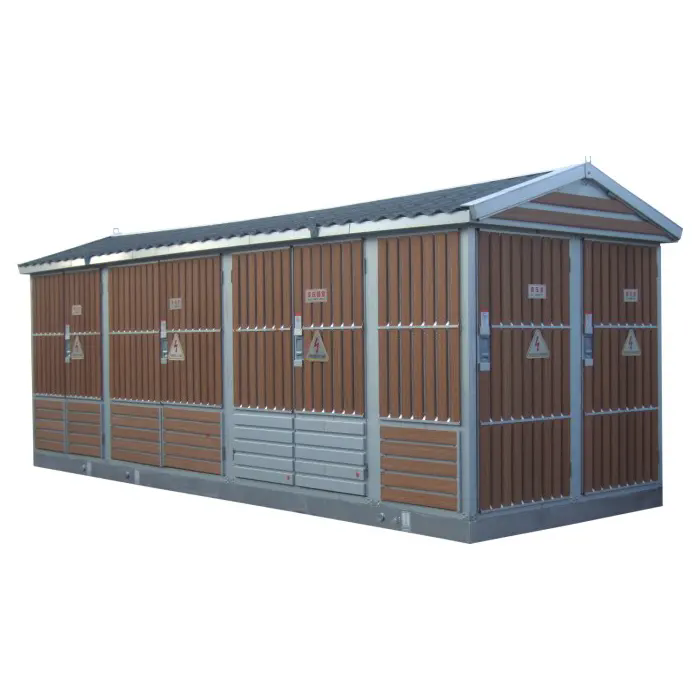
Table of Contents
- What is a Prefabricated Substation?
- Common Customer Pain Points in Power Distribution
- Key Benefits of Prefabricated Substations
- Essential Components of a Prefabricated Substation
- How is a Prefabricated Substation Installed?
- Prefabricated Substation vs Traditional Substation
- Applications of Prefabricated Substations
- Frequently Asked Questions
- Conclusion and Contact Us
What is a Prefabricated Substation?
A prefabricated substation is a pre-assembled, compact electrical distribution system designed to house all the necessary components such as transformers, switchgear, circuit breakers, and protection devices in one enclosed structure. It is often delivered as a ready-to-install unit, significantly reducing the time and complexity involved in traditional substation installations.
These substations are commonly used in locations where space is limited, or where rapid deployment is critical. They provide a more efficient, safer, and more environmentally friendly alternative to traditional substations.
Common Customer Pain Points in Power Distribution
Customers in power distribution often face a variety of challenges when it comes to selecting and installing substations. Common pain points include:
- Long installation times and delays
- High costs associated with traditional substation construction
- Space constraints in urban or industrial areas
- Limited flexibility in adapting to changing energy demands
- Difficulty in ensuring the safety and reliability of the system
These challenges can be mitigated with the adoption of prefabricated substations, which offer faster deployment, lower costs, and enhanced flexibility in addressing the dynamic needs of the power distribution industry.
Key Benefits of Prefabricated Substations
Prefabricated substations offer a range of benefits that make them a superior choice for many power distribution applications:
- Reduced Construction Time – Prefabricated units are delivered fully assembled, significantly reducing the time required for installation compared to traditional methods.
- Cost-Effectiveness – With all components pre-assembled and tested, there is no need for extensive on-site work, leading to significant cost savings.
- Compact Design – The modular and space-efficient design of prefabricated substations allows for installation in locations with limited space.
- Scalability – Prefabricated substations can be easily expanded or modified as power demands increase or change.
- Enhanced Safety – The sealed environment and integrated design reduce the risks associated with electrical failures and enhance overall system safety.
- Environmental Impact – These units are designed with sustainability in mind, reducing the environmental footprint of power distribution systems.
Essential Components of a Prefabricated Substation
A prefabricated substation integrates several key components to ensure efficient and reliable power distribution. These include:
- Transformers – Responsible for stepping up or stepping down voltage to appropriate levels for distribution.
- Switchgear – Includes circuit breakers, disconnectors, and fuses to protect the system from electrical faults.
- Protection Devices – Includes relays, control systems, and other devices to ensure safe operation and automatic fault isolation.
- Busbars – Conductors used to distribute power between various components of the system.
- Cooling Systems – To regulate the temperature of electrical components and prevent overheating.
- Monitoring Systems – Advanced control panels that allow operators to monitor and manage substation operations remotely.
How is a Prefabricated Substation Installed?
The installation of a prefabricated substation is a streamlined process, typically requiring only site preparation and the connection of incoming and outgoing power lines. The steps are as follows:
- Site Preparation – Ensure the site is level and suitable for the size of the substation.
- Transportation – The prefabricated unit is delivered to the site, usually by truck or other large transport vehicles.
- Positioning – The unit is carefully placed in the prepared location using cranes or other lifting equipment.
- Connection – The electrical components are connected to the power grid, including high-voltage and low-voltage lines, as well as communication cables for remote monitoring.
- Testing – Once connected, the system is thoroughly tested for performance and safety before being fully commissioned.
Prefabricated Substation vs Traditional Substation
Here’s a quick comparison between prefabricated and traditional substations to highlight the advantages of prefabricated units:
| Feature | Prefabricated Substation | Traditional Substation |
|---|---|---|
| Installation Time | Fast, usually completed within weeks | Long, often several months |
| Cost | Lower initial and operational costs | Higher due to construction and labor costs |
| Space Efficiency | Compact, ideal for tight spaces | Requires large spaces and infrastructure |
| Flexibility | Modular and scalable | Limited scalability |
| Maintenance | Low-maintenance due to integrated design | Requires more frequent and complex maintenance |
Applications of Prefabricated Substations
Prefabricated substations are versatile and can be used in various applications, including:
- Urban and Industrial Areas – Where space is limited, and rapid installation is required.
- Renewable Energy Projects – Integrating renewable energy sources into the grid.
- Remote Locations – Providing power distribution in hard-to-reach or off-grid areas.
- Emergency and Temporary Solutions – Providing fast power distribution in emergencies or temporary sites like construction zones or disaster recovery areas.
Frequently Asked Questions
What are the main advantages of prefabricated substations?
Prefabricated substations offer faster installation, lower costs, space efficiency, and modular scalability compared to traditional substations.
How long does it take to install a prefabricated substation?
Installation can be completed within weeks, depending on site preparation and the complexity of connections.
Are prefabricated substations safe?
Yes, prefabricated substations are designed with safety as a top priority, incorporating advanced protection and monitoring systems.
Can prefabricated substations be customized?
Yes, they can be tailored to meet specific project requirements, including power capacity
Prefabricated substations provide an innovative solution for power distribution, offering benefits like reduced installation times, lower costs, and enhanced flexibility. They are particularly suitable for applications where space is constrained or where rapid deployment is required. By choosing a reliable provider like DAYA Electrical, businesses can ensure that their power distribution systems are optimized for performance and efficiency.
If you’re ready to explore how a prefabricated substation can enhance your power distribution system, contact us today. Our team at DAYA Electrical is here to help you select and install the ideal solution for your needs.
Send Inquiry


X
We use cookies to offer you a better browsing experience, analyze site traffic and personalize content. By using this site, you agree to our use of cookies.
Privacy Policy