 English
 Español
  Português
  русский
  Français
  日本語
日本語  Deutsch
  tiếng Việt
  Italiano
  Nederlands
  ภาษาไทย
  Polski
  한국어
한국어  Svenska
  magyar
  Malay
Malay  বাংলা ভাষার
  Dansk
Dansk  Suomi
Suomi  हिन्दी
  Pilipino
  Türkçe
  Gaeilge
  العربية
  Indonesia
  Norsk
Norsk  تمل
تمل  český
český  ελληνικά
  український
  Javanese
  فارسی
فارسی  தமிழ்
தமிழ்  తెలుగు
  नेपाली
  Burmese
  български
  ລາວ
ລາວ  Latine
  Қазақша
  Euskal
  Azərbaycan
  Slovenský jazyk
  Македонски
  Lietuvos
  Eesti Keel
  Română
  Slovenski
  मराठी
मराठी  Srpski језик


How Does a Vacuum Circuit Breaker Improve Electrical Safety?
Abstract: This article provides a comprehensive exploration of Vacuum Circuit Breakers (VCBs), explaining their operation, specifications, and applications in high-voltage electrical systems. It addresses common questions, technical details, and practical considerations, offering a professional guide for engineers, electricians, and industrial professionals.
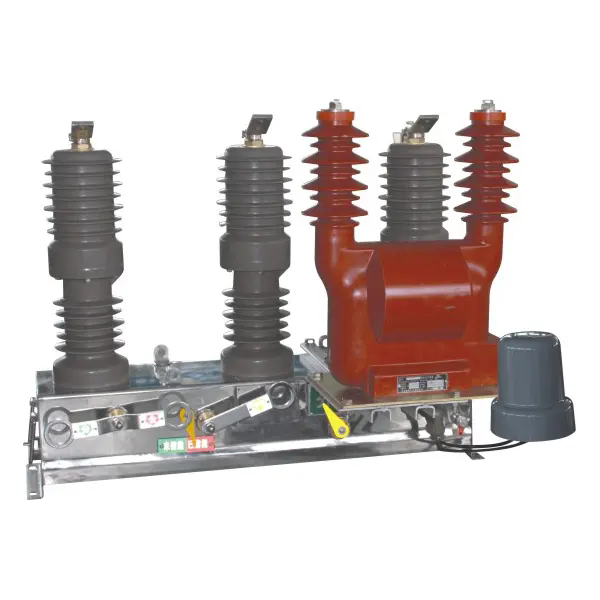
Table of Contents
- Introduction to Vacuum Circuit Breakers
- Technical Specifications
- How a Vacuum Circuit Breaker Operates
- Common Questions About Vacuum Circuit Breakers
- Future Trends and Industry Applications
- Contact Information
Introduction to Vacuum Circuit Breakers
Vacuum Circuit Breakers (VCBs) are critical components in electrical power distribution systems. They are designed to interrupt high-voltage currents safely, effectively preventing short circuits, overloads, and other electrical faults. VCBs are widely utilized in industrial facilities, power plants, substations, and commercial infrastructure due to their reliability and low maintenance requirements.
The core principle of a VCB is the use of a vacuum as the medium for arc extinction. When the breaker opens, the arc formed between contacts is immediately quenched by the vacuum, providing fast and reliable interruption. The robust mechanical design ensures longevity, often exceeding 30,000 operational cycles, making them an essential component for high-voltage safety.
This article aims to provide an in-depth understanding of VCBs, covering technical specifications, operational principles, common industry questions, and emerging trends. The information is particularly relevant for electrical engineers, project managers, and procurement specialists seeking detailed product insights.
Technical Specifications of Vacuum Circuit Breakers
Below is a detailed overview of typical VCB parameters to aid in selection and operational understanding:
| Parameter | Specification |
|---|---|
| Rated Voltage | 12 kV – 36 kV |
| Rated Current | 630 A – 3150 A |
| Rated Short-Circuit Breaking Current | 20 kA – 50 kA |
| Operating Mechanism | Spring-operated / Pneumatic / Motorized |
| Frequency | 50 Hz / 60 Hz |
| Insulation Medium | Vacuum |
| Mechanical Endurance | 30,000 – 50,000 operations |
| Installation Type | Indoor / Outdoor |
How a Vacuum Circuit Breaker Operates
The operation of a VCB involves several critical stages:
- Closing: Contacts are brought together to allow current flow under normal conditions.
- Interruption: Upon fault detection, the contacts separate, creating an arc that is immediately extinguished by the vacuum.
- Recovery: Dielectric strength is rapidly restored across the contacts, preventing re-striking of the arc.
- Maintenance: Vacuum interrupters require minimal maintenance, with periodic inspection recommended to ensure mechanical and electrical integrity.
Common Questions About Vacuum Circuit Breakers
1. How does a vacuum interrupter prevent electrical arcing?
A vacuum interrupter prevents arcing by eliminating the medium in which the arc can sustain itself. When contacts separate, electrons and ions are quickly absorbed or recombined within the vacuum, causing the arc to extinguish almost instantaneously.
2. What are the advantages of using VCBs over air or oil circuit breakers?
VCBs provide superior reliability, compact size, minimal maintenance, and fast interruption. Unlike oil circuit breakers, there is no fire hazard, and unlike air-insulated breakers, VCBs require less insulation space and offer higher mechanical endurance.
3. How is the rated current and voltage of a VCB determined?
The rated current and voltage are based on the operational environment, load requirements, and system voltage levels. Electrical engineers calculate the maximum expected load current and fault current, ensuring the VCB can safely interrupt faults without damage.
Future Trends and Industry Applications
Vacuum Circuit Breakers continue to evolve with advancements in materials, control systems, and digital monitoring:
- Smart Grid Integration: Modern VCBs are increasingly compatible with digital monitoring and remote operation, improving fault diagnostics and operational efficiency.
- Eco-friendly Design: New vacuum interrupters are designed to minimize environmental impact while maintaining high performance.
- High-Voltage Expansion: Ongoing research focuses on extending VCB applications to 72 kV and higher, meeting growing industrial and utility demands.
Applications range from medium-voltage industrial networks to high-voltage substations, ensuring safety and reliability for critical power systems.
Contact DAYA Electrical
DAYA Electrical is a leading manufacturer of Vacuum Circuit Breakers, delivering reliable, high-performance solutions for diverse industrial and commercial applications. For inquiries, specifications, or quotations, please contact us directly.
Send Inquiry


X
We use cookies to offer you a better browsing experience, analyze site traffic and personalize content. By using this site, you agree to our use of cookies.
Privacy Policy