 English
 Español
  Português
  русский
  Français
  日本語
日本語  Deutsch
  tiếng Việt
  Italiano
  Nederlands
  ภาษาไทย
  Polski
  한국어
한국어  Svenska
  magyar
  Malay
Malay  বাংলা ভাষার
  Dansk
Dansk  Suomi
Suomi  हिन्दी
  Pilipino
  Türkçe
  Gaeilge
  العربية
  Indonesia
  Norsk
Norsk  تمل
تمل  český
český  ελληνικά
  український
  Javanese
  فارسی
فارسی  தமிழ்
தமிழ்  తెలుగు
  नेपाली
  Burmese
  български
  ລາວ
ລາວ  Latine
  Қазақша
  Euskal
  Azərbaycan
  Slovenský jazyk
  Македонски
  Lietuvos
  Eesti Keel
  Română
  Slovenski
  मराठी
मराठी  Srpski језик


How Does Low Voltage ABC Cable Improve Power Distribution Safety and Efficiency?
Article Summary
Reliable electrical distribution is essential for residential communities, industrial facilities, and public infrastructure. Traditional bare overhead conductors often present safety risks, environmental vulnerabilities, and installation challenges. Low Voltage ABC Cable (Aerial Bundled Cable) offers a modern solution by combining insulated conductors into a bundled configuration designed for overhead distribution networks.
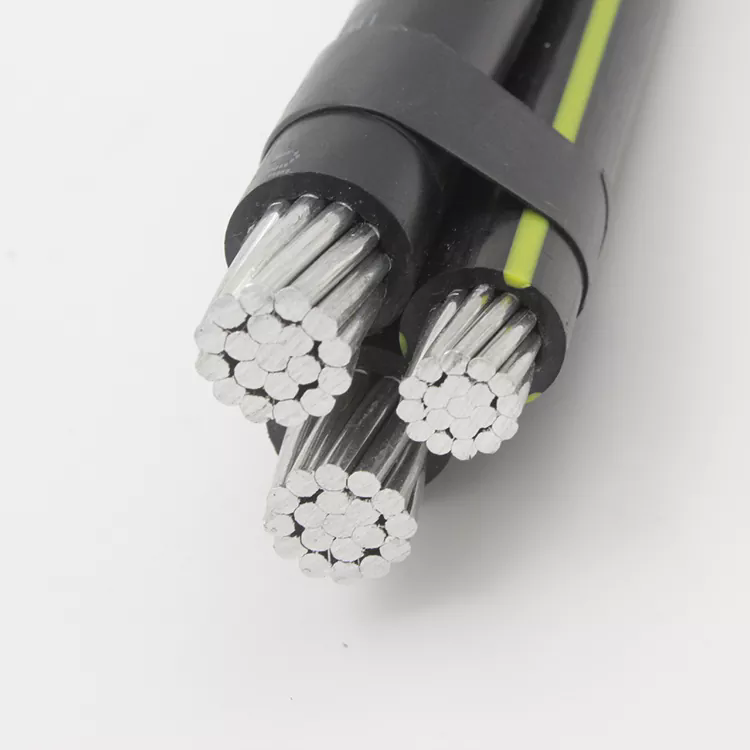
This article explains how Low Voltage ABC Cable works, its structural design, key advantages, and typical applications. It also provides technical parameters, a comparison with traditional conductors, and answers common questions that customers often encounter when selecting distribution cables.
Table of Contents
- 1. What Is Low Voltage ABC Cable
- 2. How Low Voltage ABC Cable Works
- 3. Structural Components of ABC Cable
- 4. Key Technical Parameters
- 5. Advantages Over Traditional Overhead Conductors
- 6. Common Applications
- 7. Installation Considerations
- 8. Frequently Asked Questions
- 9. Conclusion
1. What Is Low Voltage ABC Cable
Low Voltage ABC Cable, also known as Aerial Bundled Cable, is a type of insulated overhead power distribution cable designed for low-voltage electrical networks, typically below 1kV. Unlike traditional overhead lines that use bare conductors mounted on insulators, ABC cables bundle several insulated conductors together around a supporting messenger wire.
The design significantly improves electrical safety, reduces the risk of short circuits caused by environmental contact, and allows for installation in densely populated areas where bare conductors may pose hazards.
Utilities and electrical contractors prefer ABC cables for modern power distribution systems because they provide enhanced reliability, lower maintenance requirements, and improved resistance to weather conditions.
2. How Low Voltage ABC Cable Works
Low Voltage ABC Cable operates by delivering electricity through insulated aluminum conductors that are bundled together and suspended overhead. Each conductor is individually insulated, preventing accidental electrical contact between phases or external objects such as tree branches.
The cable bundle typically consists of several phase conductors and one neutral messenger wire that supports the mechanical load. The messenger wire carries the tensile strength needed to suspend the cable between poles while also serving as the neutral conductor in many configurations.
When electricity flows through the phase conductors, the insulated design ensures stable distribution while reducing electrical leakage and external interference. This configuration improves system reliability and makes the network safer for residential environments.
3. Structural Components of ABC Cable
A typical Low Voltage ABC Cable consists of several carefully engineered layers and components designed to ensure both electrical performance and mechanical durability.
- Phase Conductors – Usually made of aluminum for efficient conductivity and lightweight performance.
- Neutral Messenger – Acts as the supporting element and sometimes functions as the neutral conductor.
- Insulation Layer – Commonly made from cross-linked polyethylene (XLPE) or polyethylene to provide electrical insulation.
- Bundling Configuration – The conductors are twisted together to form a compact overhead cable structure.
This configuration ensures the cable remains stable even under wind, vibration, and environmental stress.
4. Key Technical Parameters
When selecting Low Voltage ABC Cable, engineers typically evaluate several technical parameters to ensure compatibility with the intended distribution system.
| Parameter | Description |
|---|---|
| Rated Voltage | 0.6/1 kV |
| Conductor Material | Aluminum or Aluminum Alloy |
| Insulation Type | XLPE / PE |
| Operating Temperature | Up to 90°C for continuous operation |
| Installation Type | Overhead Aerial Distribution |
| Weather Resistance | UV resistant and suitable for outdoor environments |
Manufacturers such as DAYA design Low Voltage ABC Cable products with strict quality control standards to ensure stable performance in demanding outdoor distribution systems.
5. Advantages Over Traditional Overhead Conductors
Many utilities are gradually replacing conventional bare conductors with aerial bundled cables due to several operational advantages.
- Improved Safety – Insulated conductors reduce the risk of electric shock and short circuits.
- Reduced Power Loss – Stable insulation minimizes electrical leakage.
- Lower Maintenance – Less vulnerability to tree branches and environmental damage.
- Higher Reliability – Bundled structure reduces phase contact during storms.
- Space Efficiency – Suitable for narrow streets and crowded urban areas.
Because of these benefits, ABC cables have become widely used in residential electrification projects and rural power distribution networks.
6. Common Applications
Low Voltage ABC Cable is designed for a wide range of overhead power distribution scenarios.
- Urban residential power distribution
- Rural electrification projects
- Temporary construction power supply
- Industrial park electrical networks
- Street lighting systems
In regions with frequent storms or dense vegetation, ABC cables provide a safer alternative to exposed conductors because the insulated design minimizes outages caused by accidental contact.
7. Installation Considerations
Proper installation is essential to ensure optimal performance and service life of Low Voltage ABC Cable systems.
- Use appropriate pole spacing to maintain mechanical stability
- Ensure proper tensioning of the messenger wire
- Avoid excessive bending during installation
- Use compatible connectors and fittings
- Follow recommended clearance distances from structures
Professional installation practices ensure that the cable maintains both electrical efficiency and structural integrity throughout its operational lifespan.
8. Frequently Asked Questions
Q1: What is the difference between ABC cable and traditional overhead wire?
Traditional overhead systems use bare conductors mounted on insulators, while ABC cables use insulated conductors bundled together. This design significantly improves safety and reduces environmental interference.
Q2: Is Low Voltage ABC Cable suitable for residential areas?
Yes. ABC cables are widely used in residential communities because the insulated design reduces electrical hazards and minimizes outages caused by external contact.
Q3: What insulation materials are commonly used in ABC cables?
Most manufacturers use cross-linked polyethylene (XLPE) or polyethylene insulation due to their excellent electrical properties, heat resistance, and durability in outdoor environments.
Q4: How long does ABC cable typically last?
With proper installation and maintenance, Low Voltage ABC Cable can operate reliably for more than 25 years in standard power distribution systems.
9. Conclusion
Low Voltage ABC Cable represents a modern and efficient approach to overhead power distribution. By combining insulated conductors with a bundled structure, the cable significantly improves electrical safety, system reliability, and environmental resistance. It has become an important solution for utilities, construction projects, and infrastructure development worldwide.
Manufacturers such as DAYA provide high-quality Low Voltage ABC Cable solutions designed to meet the demanding requirements of modern electrical distribution systems. Whether used for urban networks or rural electrification projects, selecting the right cable design plays a crucial role in ensuring stable and efficient power delivery.
If you are looking for reliable aerial bundled cable solutions or need professional guidance in selecting the appropriate specifications for your project, contact us to learn more about our products and technical support services.
Send Inquiry


X
We use cookies to offer you a better browsing experience, analyze site traffic and personalize content. By using this site, you agree to our use of cookies.
Privacy Policy