 English
 Español
  Português
  русский
  Français
  日本語
日本語  Deutsch
  tiếng Việt
  Italiano
  Nederlands
  ภาษาไทย
  Polski
  한국어
한국어  Svenska
  magyar
  Malay
Malay  বাংলা ভাষার
  Dansk
Dansk  Suomi
Suomi  हिन्दी
  Pilipino
  Türkçe
  Gaeilge
  العربية
  Indonesia
  Norsk
Norsk  تمل
تمل  český
český  ελληνικά
  український
  Javanese
  فارسی
فارسی  தமிழ்
தமிழ்  తెలుగు
  नेपाली
  Burmese
  български
  ລາວ
ລາວ  Latine
  Қазақша
  Euskal
  Azərbaycan
  Slovenský jazyk
  Македонски
  Lietuvos
  Eesti Keel
  Română
  Slovenski
  मराठी
मराठी  Srpski језик


How Does a Vacuum Circuit Breaker Work in Modern Power Distribution Systems?
Article Summary
A Vacuum Circuit Breaker (VCB) is one of the most reliable switching devices used in medium-voltage power distribution systems. It protects electrical equipment from overloads and short circuits by quickly interrupting current flow in a vacuum environment. This article explains how a vacuum circuit breaker works, its structure, working principles, major advantages, technical parameters, and common application scenarios. It also addresses typical concerns buyers have when selecting a VCB for industrial or utility installations.
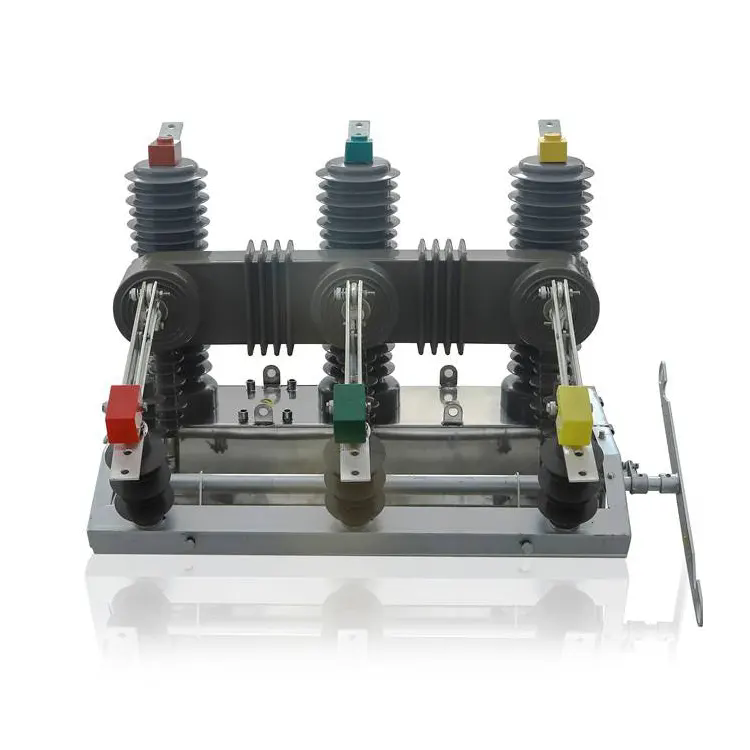
Table of Contents
- Introduction to Vacuum Circuit Breakers
- How a Vacuum Circuit Breaker Works
- Main Components of a Vacuum Circuit Breaker
- Key Technical Parameters
- Advantages of Vacuum Circuit Breakers
- Common Applications
- How to Choose the Right Vacuum Circuit Breaker
- Frequently Asked Questions
- Conclusion
Introduction to Vacuum Circuit Breakers
Electrical power systems require reliable protection equipment to maintain safety and stability. When abnormal conditions such as short circuits or overloads occur, protective devices must interrupt the current immediately to prevent equipment damage and fire hazards. Among various switching technologies, the Vacuum Circuit Breaker (VCB) has become a preferred solution for medium-voltage networks ranging from 3.6kV to 40.5kV.
A vacuum circuit breaker interrupts electrical current using vacuum as the arc-quenching medium. Compared with traditional oil circuit breakers or air circuit breakers, vacuum technology offers higher reliability, longer service life, and minimal maintenance requirements. These advantages make VCBs widely used in power plants, industrial facilities, substations, and commercial electrical systems.
Manufacturers such as DAYA have developed advanced vacuum circuit breaker solutions that support stable operation in demanding electrical environments. These products are designed to deliver fast switching performance, high insulation strength, and consistent arc extinction.
How a Vacuum Circuit Breaker Works
The operating principle of a vacuum circuit breaker is based on interrupting an electric arc within a sealed vacuum chamber. The absence of gas molecules allows the arc to extinguish rapidly when the current passes through zero.
The working process can be explained through several key steps:
- Normal Operation – During standard operation, the breaker contacts remain closed, allowing current to flow through the circuit.
- Fault Detection – When a fault such as overload or short circuit occurs, the protection system sends a signal to the breaker mechanism.
- Contact Separation – The operating mechanism quickly separates the moving contact from the fixed contact inside the vacuum interrupter.
- Arc Generation – As the contacts separate, an electrical arc forms due to the high current flow.
- Arc Extinction – In the vacuum chamber, metal vapor from the contacts forms a plasma arc that quickly extinguishes at the next current zero point.
- Current Interruption – Once the arc is extinguished, the vacuum provides high dielectric strength, preventing the arc from re-igniting.
Because the vacuum environment has extremely low pressure, the arc duration is very short. This allows vacuum circuit breakers to interrupt current more efficiently and safely than many traditional breaker types.
Main Components of a Vacuum Circuit Breaker
A typical vacuum circuit breaker consists of several essential components that work together to ensure reliable circuit protection.
- Vacuum Interrupter – The core component responsible for arc extinguishing.
- Fixed Contact – Stationary electrical contact inside the interrupter.
- Moving Contact – Connected to the operating mechanism and moves during switching.
- Operating Mechanism – Mechanical or spring-operated system that opens and closes the contacts.
- Insulating Housing – Provides insulation and structural protection.
- Control Circuit – Sends signals for automatic or manual operation.
These components are carefully engineered to ensure durability and precise operation, even under repeated switching cycles.
Key Technical Parameters
When selecting a vacuum circuit breaker, engineers and purchasing managers typically evaluate several technical specifications.
| Parameter | Description |
|---|---|
| Rated Voltage | Common ranges include 3.6kV, 7.2kV, 12kV, 24kV, and 40.5kV |
| Rated Current | Usually between 630A and 4000A depending on application |
| Breaking Capacity | Indicates the maximum fault current the breaker can safely interrupt |
| Mechanical Life | Typically up to 30,000 operations or more |
| Electrical Life | Depends on switching load conditions |
| Operating Mechanism | Spring mechanism or electromagnetic mechanism |
Advanced manufacturers like DAYA design their vacuum circuit breakers to meet international standards and deliver consistent performance in demanding power environments.
Advantages of Vacuum Circuit Breakers
Vacuum circuit breakers have gradually replaced many traditional breaker technologies due to their numerous advantages.
- High Reliability – Vacuum technology ensures stable arc extinction and consistent switching performance.
- Long Service Life – The vacuum interrupter experiences minimal wear compared with oil-based breakers.
- Low Maintenance – No oil replacement or gas refilling is required.
- Compact Design – Smaller size allows easy integration into switchgear panels.
- Environmental Safety – Vacuum interrupters eliminate risks associated with oil leaks or gas emissions.
- Fast Switching Speed – Rapid arc extinction improves system protection.
These advantages make VCB technology an ideal solution for modern power distribution networks.
Common Applications
Vacuum circuit breakers are widely used across different industries and electrical systems.
- Medium-voltage power distribution networks
- Industrial manufacturing plants
- Power generation facilities
- Substations and transformer stations
- Mining and heavy industry
- Commercial buildings and infrastructure
In these environments, reliable circuit protection is critical to maintaining stable power supply and preventing costly downtime.
How to Choose the Right Vacuum Circuit Breaker
Selecting the correct vacuum circuit breaker involves evaluating several factors related to system requirements and operational conditions.
- Voltage Rating – Ensure the breaker matches the system voltage level.
- Short-Circuit Capacity – Choose a breaker capable of handling the maximum expected fault current.
- Installation Type – Indoor or outdoor installation environments may require different designs.
- Operating Frequency – Systems with frequent switching may require breakers with higher mechanical endurance.
- Manufacturer Reliability – Choosing an experienced supplier ensures product quality and technical support.
Professional manufacturers such as DAYA provide a range of vacuum circuit breaker models designed to meet diverse industrial and utility requirements.
Frequently Asked Questions
Q1: What voltage range is suitable for vacuum circuit breakers?
Vacuum circuit breakers are primarily designed for medium-voltage applications, typically ranging from 3.6kV to 40.5kV. They are commonly installed in distribution systems, substations, and industrial power networks.
Q2: Why is vacuum used as the arc-quenching medium?
Vacuum has extremely high dielectric strength and very few gas molecules. This environment allows the arc to extinguish quickly when the current passes through zero, making the interruption process efficient and reliable.
Q3: How long does a vacuum circuit breaker last?
A well-designed vacuum circuit breaker can achieve a mechanical life of up to 30,000 operations or more. The actual service life depends on switching frequency, load conditions, and maintenance practices.
Q4: Are vacuum circuit breakers environmentally friendly?
Yes. Vacuum circuit breakers do not use oil or SF6 gas as an arc-quenching medium, which reduces environmental risks and simplifies maintenance.
Conclusion
Vacuum circuit breakers play a crucial role in protecting modern electrical systems. Their fast arc extinction capability, long service life, and minimal maintenance requirements make them an efficient solution for medium-voltage power distribution. As industries continue to demand reliable and safe power infrastructure, the adoption of vacuum switching technology continues to grow worldwide.
With extensive manufacturing experience and advanced engineering capabilities, DAYA provides high-quality vacuum circuit breaker solutions designed for stable performance and long-term reliability. If you are looking for dependable circuit protection equipment for industrial or utility applications, the right supplier can make a significant difference.
For product details, technical specifications, or customized solutions, contact us today. The professional team at DAYA is ready to help you find the most suitable vacuum circuit breaker for your power distribution project.
Send Inquiry


X
We use cookies to offer you a better browsing experience, analyze site traffic and personalize content. By using this site, you agree to our use of cookies.
Privacy Policy