 English
 Español
  Português
  русский
  Français
  日本語
日本語  Deutsch
  tiếng Việt
  Italiano
  Nederlands
  ภาษาไทย
  Polski
  한국어
한국어  Svenska
  magyar
  Malay
Malay  বাংলা ভাষার
  Dansk
Dansk  Suomi
Suomi  हिन्दी
  Pilipino
  Türkçe
  Gaeilge
  العربية
  Indonesia
  Norsk
Norsk  تمل
تمل  český
český  ελληνικά
  український
  Javanese
  فارسی
فارسی  தமிழ்
தமிழ்  తెలుగు
  नेपाली
  Burmese
  български
  ລາວ
ລາວ  Latine
  Қазақша
  Euskal
  Azərbaycan
  Slovenský jazyk
  Македонски
  Lietuvos
  Eesti Keel
  Română
  Slovenski
  मराठी
मराठी  Srpski језик


At What Voltage Must You Use a Medium Voltage Cable? It Depends on Which Standard You Ask
This question comes up in almost every cable specification meeting. The short answer: there is no single global definition. Different standards bodies draw the line at different places, and that ambiguity can cause real headaches during project execution.
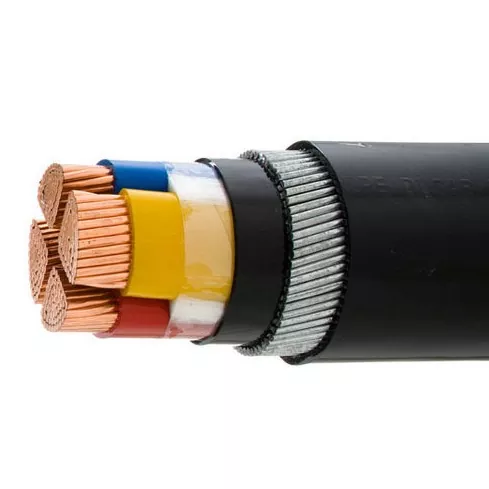
Three Standards, Three Different Answers
| Standard / Source | Voltage Range | Notes |
|---|---|---|
| IEEE (US market standard) | 2,000V – 35,000V | Most widely used definition in North America |
| IEEE 1186-2025 | 2,001V – 46,000V | Latest update covering nuclear facility cable systems |
| IEEE 1816-2024 | 2.5kV – 46kV | Applies to shielded cable terminations and splices |
| IEC 60502 | 1kV – 66kV | Common in European and Asian markets |
| European practice (e.g. Igus) | 1,000V – 30kV | Used in industrial automation and machinery |
| Solar/PV industry | 1kV – 35kV | Typical range for renewable energy collection systems |
The practical consensus: below 2,000V is low voltage, above 35kV is high voltage, and everything in between is medium voltage. The gray area sits between 1kV and 2kV, where the classification depends entirely on which standard governs your project.
The Real Answer: It Depends on Where Your Project Is
For engineers and procurement teams, the academic debate matters less than knowing which standard applies to your specific installation.
US projects (IEEE/NEC framework): Medium Voltage Cable starts at 2,000V. The most common cable ratings you will encounter are 5kV, 8kV, 15kV, 25kV, and 35kV. For nuclear power plants, keep in mind that IEEE 1186-2025 now extends the medium voltage ceiling to 46kV.
International projects (IEC framework): Medium voltage typically starts at 1kV. Standard ratings include 3.3kV, 6.6kV, 11kV, 22kV, and 33kV. For example, Australian standard AS/NZS 1429.1 covers cables ranging from 1.9/3.3kV all the way to 19/33kV.
Solar and renewable energy projects: System voltages typically fall between 1kV and 35kV. The two most common levels are 15kV (matching 12.47kV or 13.8kV grid interconnection) and 35kV (matching 34.5kV).
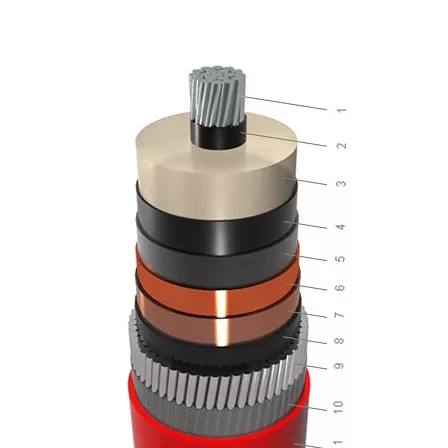
Three Critical Parameters You Must Check
Cable voltage ratings are usually marked as Uo/U, for example 6.35/11kV. Here is what each number means:
| Parameter | Meaning | Example (6.35/11kV) |
|---|---|---|
| Uo | Rated voltage between conductor and ground (or shield) | 6.35kV |
| U | Rated voltage between conductors | 11kV |
| Um | Maximum system voltage the cable can withstand | Typically 12kV for a "11kV" system |
Do not just look at the cable's "voltage class" and assume it fits. Match Uo to your system's phase-to-ground voltage, and U to your system's phase-to-phase voltage. Getting this wrong is one of the most common causes of premature cable failure.
Shielded vs. Unshielded: When Is It Mandatory?
Another question that follows closely: at what voltage do I need shielded cable?
| Application | Shield Required? | Reason |
|---|---|---|
| Below 2kV, dry locations, short runs | Not required | Lower electrical stress, minimal interference risk |
| Above 2kV, most installations | Yes | Electric field stress becomes significant |
| Above 5kV | Mandatory | Required by NEC and IEEE standards |
| Any location with sensitive electronics | Yes | EMI protection |
For any cable operating above 5kV, shielding is not optional. The metallic shield equalizes electric field stress, carries fault current, and protects against electromagnetic interference. IEEE 1816-2024 dedicates an entire standard to proper termination and splicing of shielded cables from 2.5kV to 46kV, emphasizing that workmanship on terminations is often more critical than the cable itself.
A Quick Decision Guide
| Your System Voltage | Cable Classification | Shielding | Applicable Standard |
|---|---|---|---|
| 120V – 600V | Low Voltage | Not required | NEC Article 310 |
| 1kV – 2kV | Low or Medium (depends) | Optional | Check local code |
| 2kV – 2.5kV | Medium (IEEE) / Low (IEC) | Recommended | IEEE / IEC depending on region |
| 2.5kV – 35kV | Medium Voltage | Required | IEEE 1816-2024, IEC 60502 |
| 35kV – 46kV | Medium (IEEE) / High (some regions) | Required | IEEE 1186-2025 for special applications |
| Above 46kV | High Voltage | Required | Specialized HV standards |
The Bottom Line
Medium Voltage Cable starts somewhere between 1kV and 2.5kV, depending on which standard your project follows. For US projects, the practical answer is 2,000V. For IEC-governed projects, it is 1kV.
What matters more than the threshold is this: understand your system's actual Uo/U values, confirm the shielding requirement, and pay as much attention to termination workmanship as you do to the cable specification. The most expensive cable in the world will fail prematurely if the joint is poorly made.
Send Inquiry


X
We use cookies to offer you a better browsing experience, analyze site traffic and personalize content. By using this site, you agree to our use of cookies.
Privacy Policy